
PC Big Box Games
**SCROLL DOWN FOR OUR CURRENT SELECTION OF PC BIG BOX GAMES!**
Big Box PC Games
There was a time—not all that long ago, although it can feel like another lifetime—when video games weren’t simply digital files waiting to be downloaded. They were physical objects: oversized packages filled with artwork, manuals, maps, stories, and imagination.
The **Big Box PC Gaming Era**, spanning roughly from the early 1980s through the early 2000s, was about far more than a particular style of packaging. It was a cultural moment in gaming—a celebration of creativity and craftsmanship that connected the physical world with the growing possibilities of digital entertainment.
This was the age of **thick instruction manuals**, **striking cover artwork**, and game boxes that could be as substantial as a small book. Buying a game felt like receiving something special. Even before the computer was switched on, the experience had already begun.
In this article, we’ll take a nostalgic journey through the history, culture, design, and lasting appeal of Big Box PC games. Whether you remember the DOS era firsthand or discovered these games long after they disappeared from store shelves, this was one of gaming’s most distinctive and creatively rich periods.
## **1. The Anatomy of the Big Box**
To understand why the Big Box era was so memorable, it helps to understand what actually made these packages so impressive.
Big Box games were, quite literally, **large cardboard boxes**, often measuring around 9.5 by 7.5 inches and up to two inches deep. Their size made them impossible to overlook on a retail shelf, while their artwork and weight gave them a sense of importance.
Open one up and you could discover an entire collection of physical extras:
* A **game manual**, frequently spiral-bound and sometimes more than 100 pages long
* **Installation disks**, whether floppy disks or CD-ROMs
* A **registration card**
* **Posters, maps, or technical blueprints**
* **Lore books** and even short novellas
* **Feelies**—physical objects such as coins, symbols, letters, or other props, famously used by Infocom
These packages were much more than containers for software. They were **an extension of the game itself**.
They rewarded patience. They encouraged curiosity. And they made the simple act of opening a game feel like the beginning of an adventure.
## **2. The Birth of the Box: 1980s Innovation**
The roots of the Big Box tradition can be traced back to pioneering companies such as **Infocom**, **Origin Systems**, and **Sierra On-Line**. These developers understood that a game could be more than software. It could be an entire experience.
Infocom is perhaps one of the best examples. Their legendary text adventure *Zork* included physical objects such as “peril-sensitive sunglasses” and plastic identification cards. These items weren’t simply decorative additions—they helped bring the fictional world into the real one.
In *Deadline* (1982), for example, players received photographs, letters, and even a pill bottle. These objects were connected directly to the mystery and could be important to solving the case.
That approach wasn’t merely a marketing gimmick. It was a deliberate storytelling technique.
By combining **literature, graphic design, physical objects, and interactive storytelling**, developers created games that extended beyond the computer screen. The physical contents of the box could deepen the story and make the player feel more personally involved in the world.
## **3. The 1990s Boom: Artistry at Its Zenith**
If the 1980s established the idea, the **1990s took Big Box PC gaming to another level**.
Technology had advanced, the PC gaming market had expanded, and the arrival of CD-ROMs opened the door to larger and more ambitious games. Publishers had more room to experiment, and packaging became an important part of how a game presented itself.
Consider Origin Systems’ *Wing Commander III* (1994). Its packaging was enormous and dramatic, featuring full-color imagery inspired by the game’s cinematic FMV sequences and its cast, including **Mark Hamill** and **Malcolm McDowell**.
It wasn’t simply a game sitting inside a box. It felt like owning a piece of a science-fiction epic.
Then there was *Myst* (1993). Its packaging reflected the game’s mysterious and atmospheric personality, using subdued, dreamlike artwork that hinted at a world waiting to be explored. Before players ever inserted the disc, the box had already created a sense of mystery.
*SimCity 2000* took another approach, combining a substantial manual with a humorous faux newspaper packed with city-themed jokes and references.
Even educational and family-oriented titles such as *The Oregon Trail* and *Carmen Sandiego* often came with attractive printed materials and additional content.
During the 1990s, the Big Box wasn’t treated as an afterthought. **The packaging was part of the product.**
Artists, writers, designers, and marketers all contributed to creating an experience that started in the store and continued long after the box had been opened.
## **4. Genres That Shined Brighter in Boxes**
Virtually every type of PC game appeared in Big Box packaging, but certain genres seemed almost perfectly suited to the format.
### **CRPGs (Computer Role-Playing Games)**
Games such as *Ultima*, *Baldur’s Gate*, and *Might and Magic* often arrived with a mountain of supporting material.
Players could find detailed manuals, lore books, spell references, maps, and other documentation inside the box. These weren’t merely optional extras. They often helped communicate the scale and complexity of the worlds players were about to enter.
### **Point-and-Click Adventures**
LucasArts and Sierra were particularly well suited to the Big Box format.
Games such as *The Secret of Monkey Island* and *King’s Quest* were known for distinctive artwork, memorable presentation, humorous documentation, and hidden jokes or Easter eggs.
The personality of the game often extended directly into the packaging.
### **Flight Simulators and Strategy Games**
Few genres demonstrated the importance of printed manuals quite like flight simulators and strategy games.
Some titles came with manuals that were practically **the size of telephone books**. In the case of flight simulators, this was understandable: the games could attempt to reproduce the complexity of real aircraft controls and systems.
*Falcon 3.0*, for instance, famously came with a manual of around 300 pages. Buying the game could feel less like purchasing entertainment and more like enrolling in an introductory course in military aviation.
## **5. Why the Big Box Meant So Much**
There was something almost **ceremonial** about buying a PC game in the Big Box era.
Purchasing a game at Babbage’s, CompUSA, or Electronics Boutique wasn’t simply a financial transaction. You could stand in front of the shelves, pick up a box, examine the artwork, read the back, and imagine what might be waiting inside.
Then came the journey home.
You would remove the shrink wrap, open the box, and slowly explore everything inside. The discs were only one part of the discovery. There were manuals to read, maps to unfold, registration cards to fill out, and sometimes entire fictional worlds hidden among the printed materials.
The manual itself could be part of the gameplay.
You might need it to understand the controls, learn the rules, discover important clues, or become familiar with the game’s history and characters.
## **6. The Death of the Box**
Like most golden eras, the Big Box period eventually came to an end.
During the early 2000s, PC game packaging became smaller and more standardized. DVD-style cases began replacing the oversized cardboard boxes, while digital distribution gradually changed the way people bought and owned games.
Platforms such as Steam and GOG transformed access to PC gaming, making it easier than ever to purchase and download titles. But that convenience came with a trade-off: **the physical experience was disappearing**.
There were plenty of practical reasons for the change.
Large boxes required more shelf space. They were more expensive to manufacture and transport. Printing hundreds of pages of manuals added to production costs. Retailers preferred standardized cases that could be displayed more efficiently.
At the same time, faster internet connections, larger hard drives, and increasingly convenient digital storefronts made downloads more attractive to consumers.
By around 2004, most PC games had moved away from the traditional Big Box format and adopted DVD-style packaging. Over the following years, physical PC releases themselves became increasingly uncommon.
## **7. The Legacy Lives On**
But the disappearance of the Big Box didn’t mean the idea itself disappeared.
The magic simply **found new places to live**.
Today, the influence of Big Box PC games can still be seen in several areas.
### **Collector’s Editions**
Modern games such as *Cyberpunk 2077*, *Elden Ring*, and *Baldur’s Gate 3* have embraced elaborate physical collector’s editions containing maps, statues, artwork, lore books, and other extras.
They may look different from the classic cardboard boxes, but the philosophy is remarkably similar: make the physical package feel like part of the world.
### **Indie Homages**
Independent developers and boutique publishers have also revived the idea of retro-style physical releases.
Games such as *Thimbleweed Park* and *Disco Elysium* have received limited editions featuring printed manuals, artwork, and other elements inspired by the classic Big Box tradition.
### **Preservationists and Collectors**
Meanwhile, a dedicated community of collectors and preservationists continues to celebrate this period of gaming history.
Online communities such as Reddit’s r/bigboxpcgaming, archival sites like Mobygames, and creators such as **Lazy Game Reviews (LGR)** have helped keep interest in these games and their packaging alive.
Unboxings, restoration projects, collection tours, and reviews have turned these once-common retail products into fascinating pieces of gaming history.
## **8. Why It Still Matters**
The Big Box era represented more than a particular packaging format. It reflected a **different philosophy of game design and consumption**—one based on physical interaction, anticipation, exploration, and taking your time.
In today’s world of instant downloads and digital libraries, something tangible has been lost.
The feel of the cardboard.
The smell of a freshly printed manual.
The sound of opening the box.
The weight of everything inside.
Even the commitment involved in owning a game physically felt different.
A Big Box game wasn’t simply software you purchased. It was an object that connected you to the fictional world beyond the screen.
It was **a universe you could hold in your hands**.
## **9. Final Thoughts: A Call to Remember**
When we talk about gaming history, we often focus on technological progress: faster processors, more powerful graphics cards, larger worlds, better visuals, and increasingly sophisticated hardware.
But technology is only part of the story.
Gaming history is also shaped by the **cultural and emotional experiences** surrounding the medium—how games were discovered, purchased, presented, played, and remembered.
Big Box PC games represented one of the greatest examples of that kind of craftsmanship.
They reminded us that gaming could be more than simply sitting down and playing a piece of software.
It could be an experience you **entered**.
Something you explored.
Something you lived with.
So, if you still have a few oversized boxes sitting on a shelf—or perhaps an entire garage filled with dusty gaming relics—remember what you’re actually holding.
You’re not merely keeping old games.
You’re preserving a small piece of gaming history.
A piece of magic that may never return in quite the same form.
But one we’ll never forget.
Resultaat 1–16 van de 31 resultaten wordt getoond
-
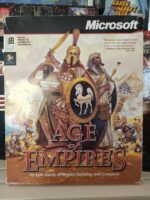
Age of Empires PC Big Box
€39,99 In winkelwagen Koop nu -
![[Gesealed] SimCity PC Big Box Games](https://retroquest.nl/wp-content/uploads/2025/06/20250614_175838-150x200.jpg)
[Gesealed] SimCity PC Big Box Games
€99,99 In winkelwagen Koop nu -

Aircraft Factory 99 Flight Simulator Expansion PC Big Box Games
€199,99 In winkelwagen Koop nu -

Alien VS Predator Big Box PC Games
€99,99 In winkelwagen Koop nu -

Army Men Air Attack Big Box PC Games
€29,99 In winkelwagen Koop nu -

Army Men In Space Big Box PC Games
€79,99 In winkelwagen Koop nu -
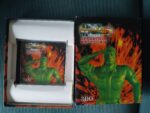
Army Men Operation Meltdown Big Box PC Games
€19,99 In winkelwagen Koop nu -

Command & Conquer Red Alert PC Big Box Games
€79,99 In winkelwagen Koop nu -

Command & Conquer Tiberian Sun PC Big Box Games
€49,99 In winkelwagen Koop nu -
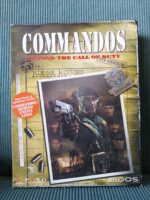
Commandos PC Big Box Games
€19,99 In winkelwagen Koop nu -

Corporate Pilot Add-On For Microsoft Flight Simulator 2000 PC CD-Rom (Big Box)
€99,99 In winkelwagen Koop nu -

Dark Earth PC Big Box Games
€29,99 In winkelwagen Koop nu -

Delta Force 1 PC Big Box Games
€49,99 In winkelwagen Koop nu -

Delta Force 2 PC Big Box Games
€49,99 In winkelwagen Koop nu -

Erik Zabels Cycling Manager PC Big Box Games
€19,99 In winkelwagen Koop nu -
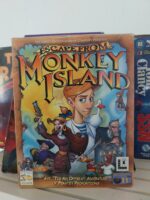
Escape From Monkey Island Big Box PC Games
€99,99 In winkelwagen Koop nu